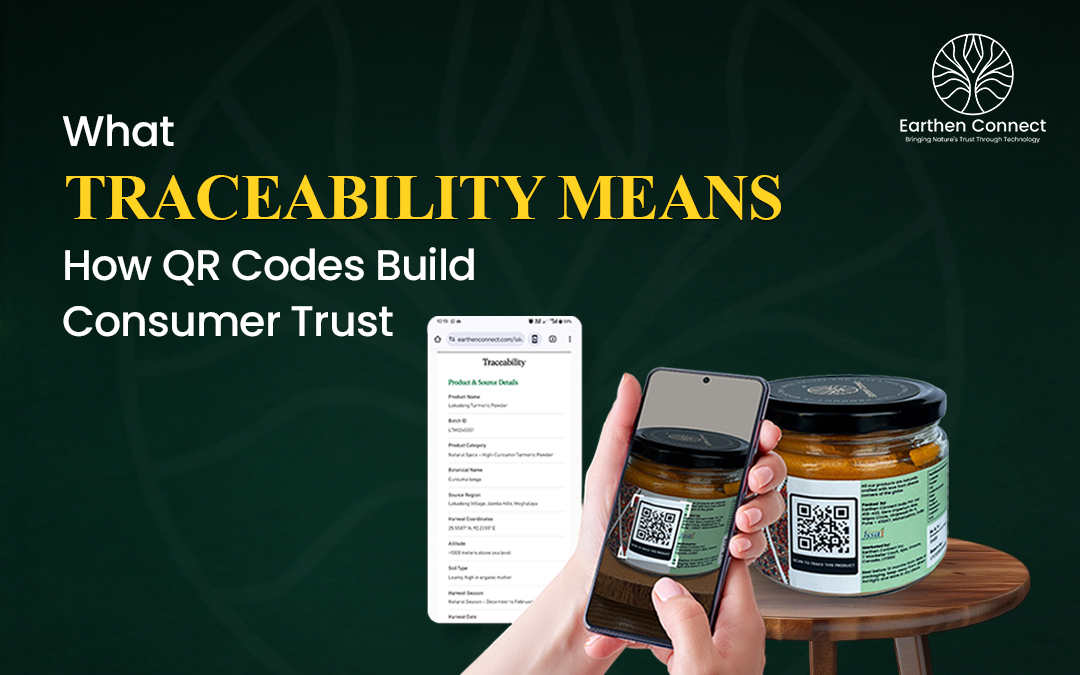
In the rapidly changing digital market, buyers are not seeking quality products only, but also evidence. They desire to understand the origin of their products, how they are produced, and whether the brands are making good on their claims. Here, traceability is needed, especially when it comes to natural food products where consumers want full visibility. QR codes are becoming a powerful instrument that bridges the gap between the real-world product and the proven digital information, which assists the brands in establishing stronger and more effective relations with consumers.
What Traceability Means to the Contemporary Consumer
Traceability is the process of monitoring the path of a product from its origin to the end consumer. In industries focused on food Traceability, this system becomes even more important because it allows customers to verify sourcing and quality.
- Supply chain visibility
- Verified product origin
- Ethical sourcing proof
- Production transparency
- Authenticity assurance
- Batch-level tracking
- Quality verification data
- Sustainability confirmation
What Are the Strengthening Processes of Consumer Trust through QR Codes?
Customers are no longer required to visit printing statements because they will be able to scan a code to see the history of a specific product within a few seconds, which is where QR code traceability plays a significant role in verifying product journeys.
- QR codes will have verified sourcing and production information that will be accessed instantly.
- Authenticity is confirmed by customers without necessarily using packaging assertions.
- Transparency in supply chains and distribution networks is guaranteed by real-time updates.
- Electronic documents eliminate information distortions and facilitate the flow of fake products.
The Increasing Role of Transparency in Brand Relationships
Transparency has ceased to be a thing of choice; it is mandatory. Contemporary consumers are doing research on brands and making purchases based on them. By making all available information regarding
- Sourcing
- Production standards
- Environmental impact
- Certifications available
This way companies present themselves in a way that makes them trustworthy and accountable. Traceability aids this transparency through the provision of organized, verifiable records, which are easy to establish.
QR codes complement this system by converting the rigid packaging into information gateways that are interactive. This not only increases credibility but also customer engagement. The open brand conveys a sense of confidence, responsibility, and sustainability in quality and ethical conduct.
What Business Advantages Do Traceable Systems Have?
Traceability is not only relevant to the business in terms of consumer expectations but also enhances efficiencies and risk management in the business. The systems that are QR-enabled generate quantifiable benefits in various fields.
- Faster product recalls
- Counterfeit prevention
- Improved compliance
- Enhanced brand credibility
- Better inventory control
- Data-driven insights
- Stronger customer loyalty
- Competitive differentiation
Conclusion
Traceability removes uncertainty and enables brands to show responsibility and integrity to consumers by enabling them to have power with knowledge. QR codes make regular packaging a reliable, digital proof point, with an added commitment at every step of the buying process. For businesses that want to establish valuable transparency and sustained consumer confidence, platforms like Earthen connect can play a crucial role by supporting credible traceability solutions that align with the growing demand for verified sourcing and product authenticity.